Roofers Far Headingley · LS16 Price Fixed In Writing Free Quotes & Drone Surveys Emergency Callouts, 7 Days Fully Insured · £5m Cover Roofers Far Headingley · LS16 Price Fixed In Writing Free Quotes & Drone Surveys Emergency Callouts, 7 Days
Roofers · Far Headingley LS16
Roofers in Far Headingley
Slate and stone slate roofs, chimney stacks, dormers and gutters across Far Headingley and Weetwood, from the cottages around Moor Road to the villas off Otley Road and Weetwood Lane. Every job starts with a free survey and a fixed quote in writing, and emergency callouts run 7 days a week.
Most common jobsSlate & stone slate, chimneys, dormers
From our base1.6 milesKirkstall, LS5
A moorland village that became a suburb
Far Headingley lies about 5 km north-west of Leeds city centre, where Weetwood Lane meets Otley Road. Leeds City Council’s appraisal traces it to cottages built on the common of Headingley Moor. After Lord Cardigan’s Enclosure of 1829, a small village of about 30 cottages and two shops grew up around that junction, with Moor Road and Cottage Road laid out and the Three Horse Shoes opening in 1832. St Chad’s Church followed in 1869, and the tram reached Far Headingley in 1875, bringing red-brick terraces and back-to-backs to the Highburys in the 1880s. Prosperous Leeds families built large villas along Otley Road, Shaw Lane and in Weetwood. Inter-war estates such as the Moor Parks and Beckett’s Park filled in much of the rest. The result is one of the most varied roofscapes in north Leeds, and every roof gets a free survey and a fixed price in writing before we start.
Stone slate, Welsh slate and clay tile
The council’s Far Headingley appraisal describes simple pitched roofs: heavy, textured stone slate on the cottages of the old village core, and slate on the Victorian villas and terraces. The Far Headingley, Weetwood and West Park Neighbourhood Design Statement, which the council adopted as a supplementary planning document, adds that over the years stone flags gave way to slate, then to plain clay tiles, and lately to “less attractive concrete tiles”. Each material needs a different repair:
Stone slate — heavy, laid in diminishing courses and hung on pegs or nails. Broken stones are replaced with matching reclaimed or new stone of the same thickness, and the roof timbers are checked because of the weight.
Welsh slate — when the nails rust, slates slip. Single slates are refixed with copper tingles; when nail failure is widespread, stripping and re-slating, reusing sound slates, is usually better value.
Plain clay tile — on the inter-war houses of the Moor Parks and Beckett’s Park, cracked tiles and failing mortar at the ridges, hips and verges are the usual problems.
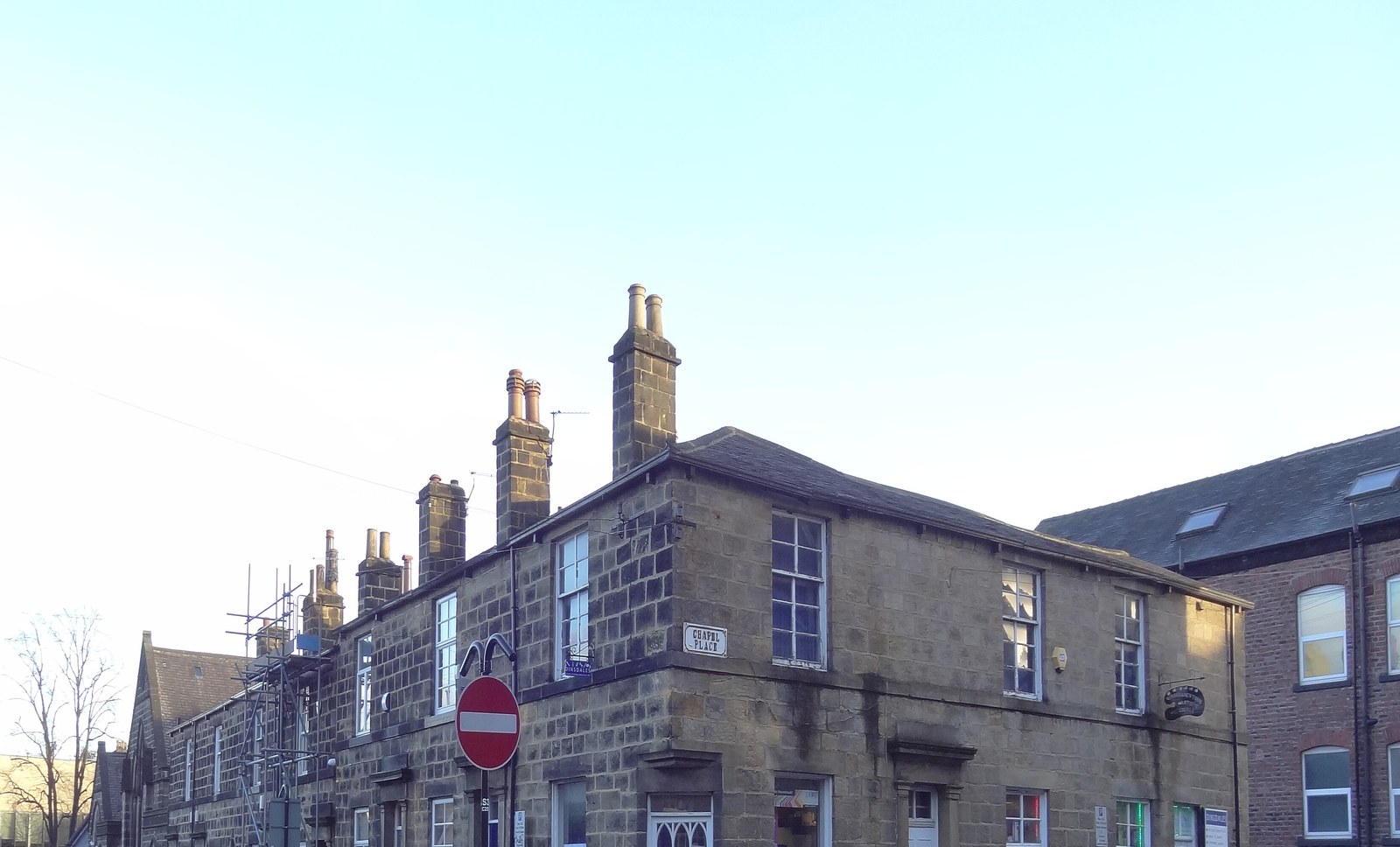
Both council documents treat chimneys as part of the area’s character. The appraisal notes brick and stone stacks, “often featuring tall chimney pots”, and the Design Statement calls chimneys an integral part of most Victorian architecture here. Tall pots catch the wind, so the flaunching that holds them cracks and lets water into the stack. Other common faults are eroded pointing, split lead flashings and stacks that have started to lean. We repoint stone stacks in lime mortar, renew lead, re-bed or replace pots to match, and rebuild unsafe stacks from sound masonry.
As a starting point: repointing from £350, lead flashing from £450, partial rebuild from £600, full rebuild from £1,500, scaffolding from £400. Access and the stack’s real condition set the final price, which is fixed in writing after a free survey (by drone if the stack is hard to see). See our chimney repair costs guide or chimney repairs.
Three conservation areas side by side
The neighbourhood includes three conservation areas, each with its own council appraisal. Far Headingley started life as the Cottage Road Conservation Area in 1972 and was later merged into Headingley. In November 2008 it was split off along Shaw Lane and Grove Lane and extended to take in terraces around Brookfield Road, houses on Hollin Lane, St Chad’s Church (Grade II*) and large 19th-century houses on Otley Road. Weetwood was designated in 1986 as part of the Meanwoodside Conservation Area, became separate in December 2008, and had its boundary reviewed in the Weetwood appraisal of 2010. West Park, covering the first Arts and Crafts houses there, was adopted in 2008.
The Weetwood appraisal describes Victorian mansion roofs with turrets, steep gables, decorative fish-scale slate, ridge tiles and finials, barge boards and tall ornate chimneys. Most are in blue and grey slate, some lodges have red tile, and the oldest buildings have stone slate. It counts 21 listed building entries, with Weetwood Hall (1625) and Spenfield both Grade II*.
Planning & permissions
Before work starts on a roof here
Dormers — in a conservation area a rear dormer needs planning permission. The Design Statement adds that dormers should only be built where they are a traditional feature and the main roof stays visually dominant, and that elsewhere they should be avoided. It points to a Claremont Drive terrace where rooflights instead of dormers have kept the roof’s shape.
Matching materials — both appraisals list replacing traditional roof coverings with inappropriate materials as harmful. Repairs in matching stone slate or slate keep you on the right side of that.
Listed buildings — listed buildings here include St Chad’s, the c1770 parsonage on Otley Road, the gate lodge to Beckett Park, the Masonic Hall on Castle Grove Drive (with its lead-covered dome) and many of the stone villa-terraces in the Claremonts. Roof changes need listed building consent.
Trees — the Far Headingley appraisal calls tree-lined roads a defining feature. Most tree work inside a conservation area needs six weeks’ notice to the council, so allow for that if branches over a roof need cutting back.
We’ll flag anything that looks likely to need consent at the survey. Boundaries changed in 2008 and 2010, so check the current maps on Leeds City Council’s conservation area pages.
What’s on the roofs of Far Headingley
Village core cottages
Early 19th-century cottages in short rows and courts off Moor Road, Cottage Road and Otley Road, some set gable-end to the street. Built of local millstone grit, much of it quarried at Meanwood.
Stone slate or slate · stone stacks · terracotta pots
Villa-terraces and red-brick rows
Stone villa-terraces in the Claremonts, many of them listed, beside Edwardian brick rows. Down the slope, the 1880s–90s red-brick terraces and back-to-backs of the Highburys, where the Design Statement says some dormers have marred the roofline.
Welsh slate · brick or stone stacks · small gabled dormers
Weetwood mansions
High Victorian villas off Weetwood Lane and Otley Road by architects including Cuthbert Brodrick, John Simpson and George Corson. Many are now university halls or apartments, so roof work often goes through a managing agent.
Moor Parks and Beckett’s Park semis in brick and render. Castle Grove Avenue has modernist pairs with curved bays and flat roofs.
Plain clay tile · flat roofs on the modernist pairs
Leaking dormers and rooflights
Many roofs here already have rooms in them, either in original gabled dormers on the larger villas or in later loft conversions. The Design Statement notes that Beckett’s Park’s plain-tiled roofs began almost dormer-free, but many have since had their roof spaces converted. Leaks around dormers usually come from cracked lead on the cheeks and aprons, a worn felt top on a flat-roofed dormer, or poorly flashed rooflights. We renew the lead, re-cover small flat dormer roofs and re-flash rooflights, all with a fixed written quote. Small dormer roofs are covered on our flat roofing page.
Gutters under the street trees
The appraisal lists horse chestnut, sycamore, beech and copper beech among the trees lining Far Headingley’s roads, most of them in front gardens close to the houses. Every autumn their leaves and seed cases fill gutters, valleys and the hoppers on downpipes, and overflowing water soaks fascias and stonework. Clearing and repairing gutters after leaf fall prevents that. Where timber fascias or barge boards have rotted, we replace them to the original profile on period houses; see fascias and soffits.
We cover Far Headingley and Weetwood streets in LS16 and the neighbouring part of LS6, including Otley Road, Weetwood Lane, Moor Road, Cottage Road, Shaw Lane, Grove Lane, Monk Bridge Road, Hollin Lane, Hollin Road, Glen Road, Brookfield Road, Burton Crescent, Castle Grove Drive, Castle Grove Avenue, Claremont Drive, Highbury Terrace, Highbury Mount, Wilton Grove, Spring Hill Terrace, Park Terrace, Weetwood Mill Lane and Spen Lane.
Possibly. Three conservation areas cover parts of the neighbourhood: Far Headingley, Weetwood and West Park. Their boundaries changed in 2008 and again in Weetwood in 2010, while estates such as Moor Park and the Highburys were left outside Far Headingley’s. Check the current maps on Leeds City Council’s conservation area pages, or ask us at the survey.
In a conservation area, a rear dormer needs planning permission. The neighbourhood’s Design Statement, a council planning document, says dormers should only go where they are a traditional feature and the main roof stays visually dominant, and points to rooflights as an alternative that keeps a terrace’s roofline. Outside the conservation areas, permitted development rules may apply. Check with Leeds planning first.
Usually, yes. Broken or slipped stone slates can be replaced individually with matching reclaimed or new stone of the same size and thickness, and failed pointing at the ridge renewed. If many fixings have failed, the roof may need stripping and relaying with the sound slates reused. We’ll tell you which after a free survey.
Guide prices start at £350 for repointing, £450 for lead flashing, £600 for a partial rebuild and £1,500 for a full rebuild, plus scaffolding from £400. The final figure depends on access and the condition of the stack, and is fixed in writing after a free survey. Our Leeds chimney cost guide breaks the figures down.
Stone slate, a tall stack or a leaking dormer in Far Headingley?
Book a free survey: you get a fixed price in writing, and major work carries a 10-year workmanship guarantee.