Roofers Halton · LS15 Price Fixed In Writing Free Quotes & Drone Surveys Emergency Callouts, 7 Days Fully Insured · £5m Cover Roofers Halton · LS15 Price Fixed In Writing Free Quotes & Drone Surveys Emergency Callouts, 7 Days
Roofers · Halton LS15
Roofers in Halton
Re-roofs, flat roofs, fascias and chimney repairs across Halton and Halton Moor, where most homes went up just before or just after the Second World War. Free survey, fixed written price, 10-year guarantee on major work.
Conservation areaNoNo conservation area; St Wilfrid’s is Grade II* listed
Typical homesMid-20th-century semis, 1930s council estate
Most common jobsRe-roofs, flat roofs, fascias
From our base5.6 milesKirkstall, LS5
Halton and Halton Moor at a glance
Halton is listed in Domesday as Halletun and began as a village on the main road from Leeds to Selby. It became a suburb through building immediately before and after the Second World War, and almost three-quarters of its homes are semi-detached or detached. To the west, Halton Moor was built in the 1930s as one of Leeds’ low-density council estates for families moved out of inner-city slum clearance areas: around 1,000 homes, mainly red brick terraces and semis, arranged off Coronation Parade. Of three later tower blocks of 60 flats, two were demolished in the early 2000s and Lakeland Court was refurbished.
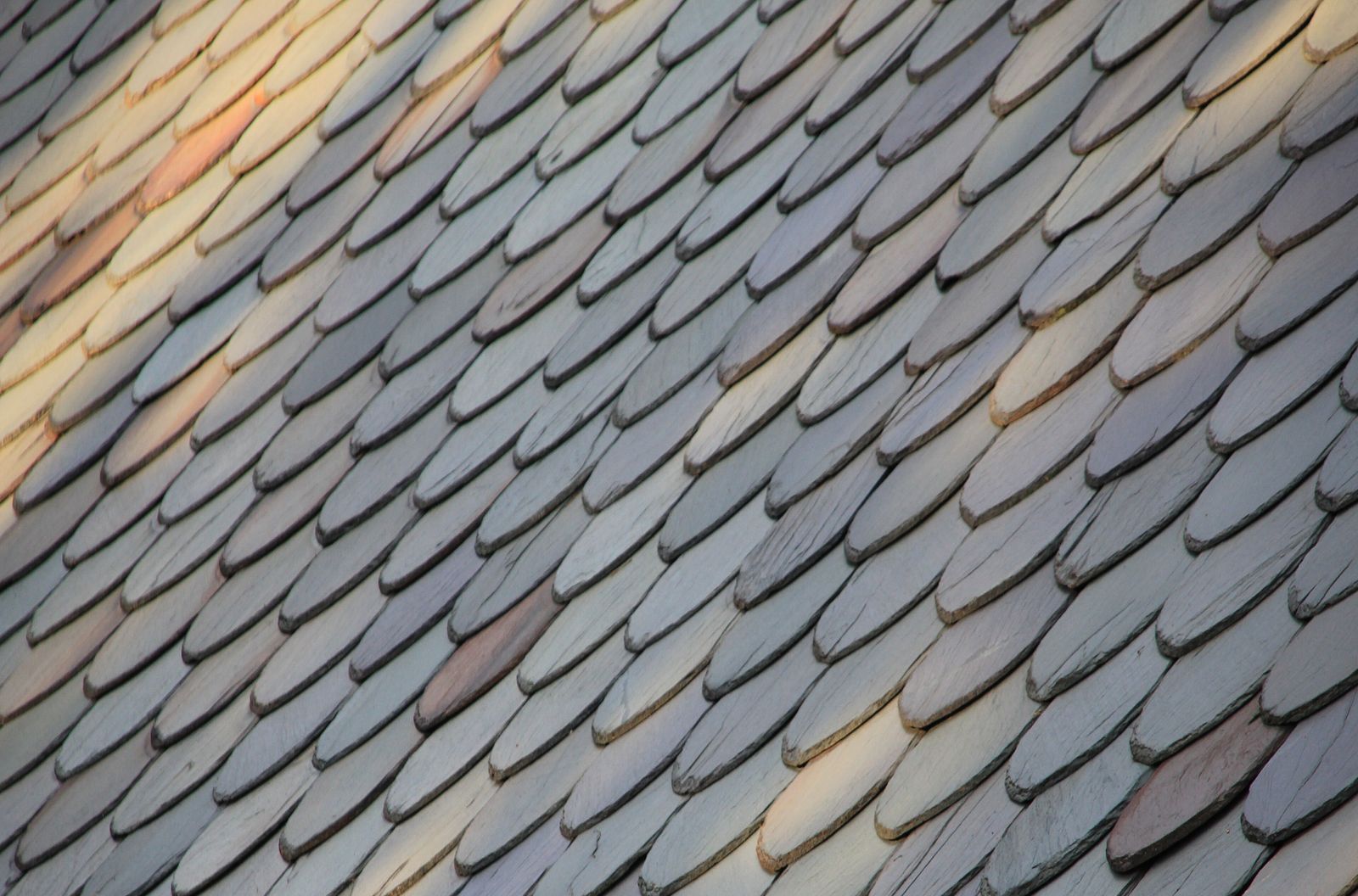
Halton has no conservation area, but it does have a few older buildings among the semis. On Chapel Street, Dial House is dated 1755 and has a stone slate roof; on Selby Road, Halton Primary School is dated 1842 and has a slate roof with large ornate barge boards. Most roofs we’re asked about here, though, are mid-century hipped or gabled tiled roofs that are reaching the end of their life.
When a mid-century roof needs replacing
A roof from the 1930s to 1950s may still have its original battens and, under the tiles, either no underlay or an early felt that has become brittle. Signs a re-roof is closer than a repair: tiles slipping in several places, daylight or damp patches in the loft, battens that crumble, and ridge and hip tiles that keep coming loose. Patching can buy time, but we’ll tell you honestly at the survey whether it is worth it.
A full re-roof means stripping to the rafters, fitting a breathable membrane and new battens, re-tiling, and renewing ridges, hips, valleys and lead. On a semi, the party-wall line and any shared chimney need care so your neighbour’s roof is left sound. See new roofs for what is involved.
Re-roofing and Building Regulations
Because Halton has no conservation area, replacing the covering on an ordinary house like for like is not normally a planning matter. Building Regulations are a separate question, and the government’s Planning Portal guidance on work to an existing roof sets out when an application is needed.
Building control basics
When a re-roof needs building control
Small repairs — no application is normally needed if less than 25 per cent of the whole building envelope and less than 50 per cent of the roof is affected.
Bigger jobs — once you go past those limits, approval is needed, and the roof may have to be brought up to current insulation standards.
Heavier coverings — if the new covering is 15 per cent or more heavier than the old one, approval is needed, because the roof structure has to carry it.
Structural change and fire — altering the structure, or using a covering that behaves very differently in a fire, also needs approval.
We set out in the written quote whether we think building control applies to your job. Listed buildings, such as St Wilfrid’s Church on Selby Road (Grade II*), are different again and need listed building consent for changes.
Halton’s housing and its roofs
Pre- and post-war semis
The bulk of Halton’s owner-occupied housing, built either side of the Second World War. Hipped or gabled roofs, bay roofs and shared stacks on the party wall.
Concrete or clay tile · hips · brick stacks
Halton Moor terraces & semis
Red brick 1930s council-built houses around Coronation Parade, Neville Road and Halton Moor Road, now a mix of council and privately owned homes.
Tiled pitched roofs · brick stacks
Lakeland Court
The remaining tower block on Halton Moor. Roof work on blocks like this is arranged by the owner or managing agent.
Flat roof
Older Halton buildings
A few earlier buildings survive, such as 18th-century Dial House on Chapel Street, built in brick with a moulded stone eaves cornice that doubles as a gutter.
Stone slate or slate · stone details
Flat roofs, garages and asbestos cement
Garages, porches and rear extensions across Halton often have flat roofs, and older felt coverings crack, blister and leak at the edges. Where the deck is sound we repair; where it isn’t we strip and recover. Our flat roofing page explains the options.
One caution with mid-20th-century roofs: asbestos cement was a common building material then. Even St Wilfrid’s Church, built in 1938 to a design by A. Randall Wells, has a flat roof of asbestos cement according to its listing. If your garage or outbuilding has corrugated or flat cement sheets, don’t drill, cut or break them. Mention it at the survey and we’ll advise on having it tested before any work is planned.
Council tenant or homeowner?
Many Halton Moor homes are still rented from Leeds City Council. If you are a council tenant, roof repairs are reported to the council, not to a private roofer: call 0800 188 4000 or use the Tenant Portal, and for emergencies the council’s 24-hour line is 0800 188 4000 or 0113 376 0410 (see the council’s report a repair page). We work for homeowners, including those who bought their former council house, and for private landlords.
Fascias, gutters and storm damage
Original timber fascias on Halton’s semis have often been painted over many times and rotted underneath. Replacing them with uPVC fascias and soffits, and renewing the gutters at the same time, saves a second scaffold later; see fascias and soffits. After high winds, we take emergency callouts 7 days a week, make the roof safe first, and quote in writing for the lasting repair via our emergency roof repairs service.
From our base in Kirkstall (LS5) we cover Halton and Halton Moor, including Selby Road, Chapel Street, Coronation Parade, Neville Road, Halton Moor Road, Carden Avenue, Templenewsam Road and the surrounding streets of LS15.
A full re-roof usually does, because it affects more than half the roof. Small repairs normally don’t, as long as less than 25 per cent of the building envelope and less than 50 per cent of the roof is involved. A heavier covering, by 15 per cent or more, or any structural change also needs approval. We tell you in the quote.
Council tenants should report roof repairs to Leeds City Council on 0800 188 4000, or 0113 376 0410 for emergencies, or through the Tenant Portal. We work for homeowners, including people who bought their former council house, and private landlords.
Leave it undisturbed: don’t drill, cut or break the sheets. Asbestos cement was widely used in mid-20th-century buildings. Tell us at the free survey and we’ll advise on testing before any work is planned.
No. Leeds City Council’s list of conservation areas has none for Halton or Halton Moor, so like-for-like re-roofing is not normally a planning matter. Listed buildings, such as St Wilfrid’s Church and Dial House, still need listed building consent for changes.
Roof past its best in Halton?
Free survey, honest advice on repair or re-roof, and a fixed price in writing.